
What is Six Sigma?
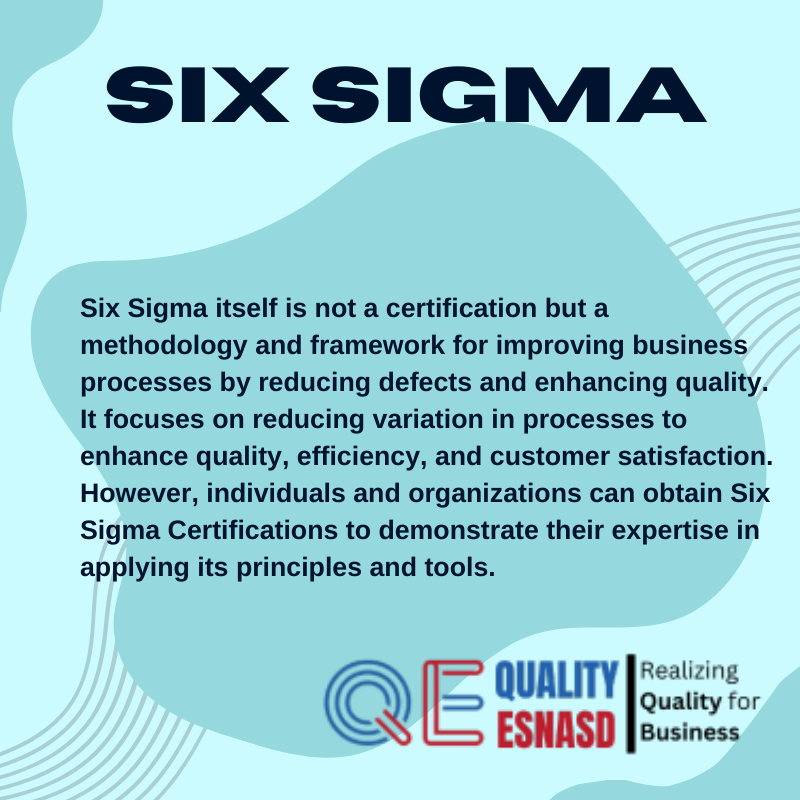
Six Sigma itself is not a certification but a methodology and framework for improving business processes by reducing defects and enhancing quality. It focuses on reducing variation in processes to enhance quality, efficiency, and customer satisfaction. However, individuals and organizations can obtain Six Sigma Certifications to demonstrate their expertise in applying its principles and tools.
Key Components of Six Sigma:
- DMAIC Framework:
- Define: Identify the problem and customer requirements.
- Measure: Collect data to understand the current process.
- Analyze: Identify root causes of defects or inefficiencies.
- Improve: Develop and implement solutions to address root causes.
- Control: Maintain improvements through monitoring and control plans.
- Six Sigma Belts: Professionals are certified at different levels, such as:
- White Belt: Basic understanding.
- Green Belt: Project leaders focused on process improvements.
- Black Belt: Experts managing large-scale projects.
- Master Black Belt: Mentors who train and guide Black Belts.
Six Sigma Certifications:
These certifications are structured in levels, often referred to as “belts,” similar to martial arts, and each level signifies a deeper understanding of Six Sigma concepts:
- White Belt: Introductory level for understanding basic concepts.
- Yellow Belt: Focuses on supporting Six Sigma projects and identifying processes for improvement.
- Green Belt: Trains individuals to lead smaller projects and assist Black Belts.
- Black Belt: Prepares professionals to lead larger projects and manage teams.
- Master Black Belt: Advanced level for training others and implementing Six Sigma strategies at an organizational level.
Benefits of Six Sigma:
- Improved Quality: Reduces defects and ensures consistency.
- Cost Savings: Eliminates inefficiencies, lowering operational costs.
- Customer Satisfaction: Enhances product/service reliability, meeting customer expectations.
- Employee Engagement: Encourages a culture of continuous improvement.
- Scalability: Applicable to various industries, including manufacturing, healthcare, IT, and services.

Reviews
There are no reviews yet.